Find out where to start your HIPAA risk analysis process.
Quick Answer:
How do you conduct a HIPAA risk analysis?
A HIPAA risk analysis follows a defined process: scope definition, vulnerability identification, threat identification, risk identification, risk level prioritization, identification of security measures, and documentation.
- Scope definition inventories everywhere patient health information is created, received, stored, or transmitted across the organization.
- Vulnerability and threat identification map out weaknesses in current systems and the specific ways those weaknesses could be exploited.
- Risks are then ranked by severity so remediation efforts are prioritized correctly rather than addressed randomly.
- The process concludes with identifying appropriate security measures and documenting the entire analysis, since documentation is required to demonstrate compliance with HIPAA's Security Rule.
Quick Answer: How Do You Conduct a HIPAA Risk Analysis?
A HIPAA risk analysis requires identifying scope, vulnerabilities, threats, and risks, then prioritizing and documenting them alongside applicable security measures.
- Scope definition: Identify where ePHI is created, received, maintained, or transmitted across your environment.
- Vulnerability and threat identification: Pinpoint weaknesses in systems/processes and the threats that could exploit them.
- Risk identification and prioritization: Determine likelihood and impact, then rank risks by severity.
- Security measures: Document existing and needed safeguards to mitigate identified risks.
- Documentation: Required under the Security Rule to demonstrate an accurate, thorough assessment.
Learn the simplest way to conduct a risk analysis.
Most healthcare entities understand they are required to conduct an accurate and thorough assessment of their potential risks and vulnerabilities in order to comply with HIPAA’s Security Rule. But many don’t know where to start.
Looking for a downloadable HIPAA risk analysis template worksheet?
This process of identifying risks and vulnerabilities is known as the HIPAA risk analysis. The purpose of a risk analysis is to discover exactly how patient health information is (or isn’t) protected in an entity’s environment.
Let’s review a simple methodology behind how to properly conduct a risk analysis.
How do you properly conduct a risk analysis?
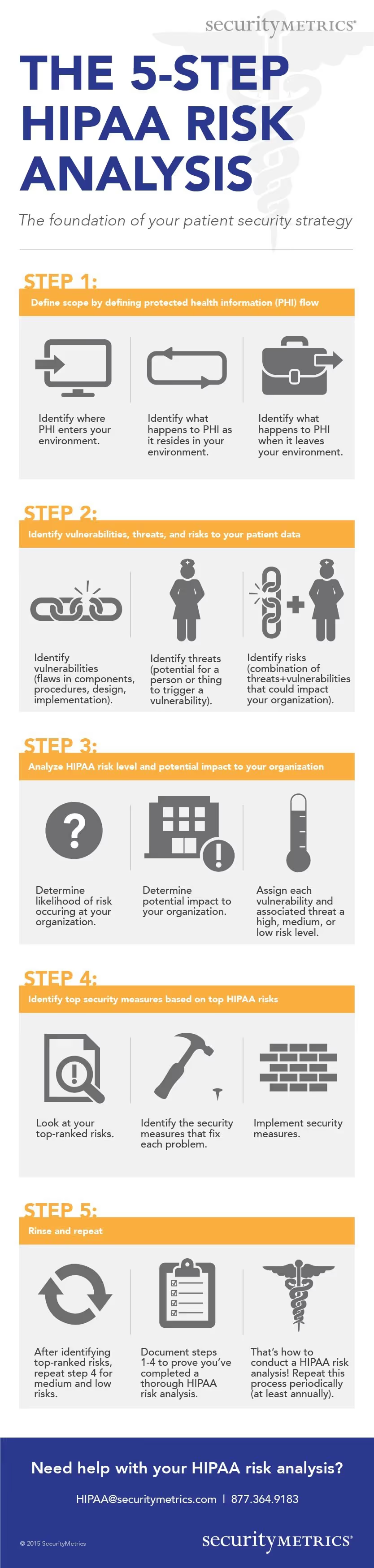
We condensed a HIPAA risk analysis sample into five step-by-step to do’s that should help you understand the simplest way to conduct your HIPAA risk analysis.
See also: 5 Steps to Making a Risk Assessment
According to SecurityMetrics HIPAA auditors, a risk analysis should include:
- Scope definition
- Vulnerability identification
- Threat identification
- Risk identification
- Risk level prioritization
- Identification of security measures
- Documentation
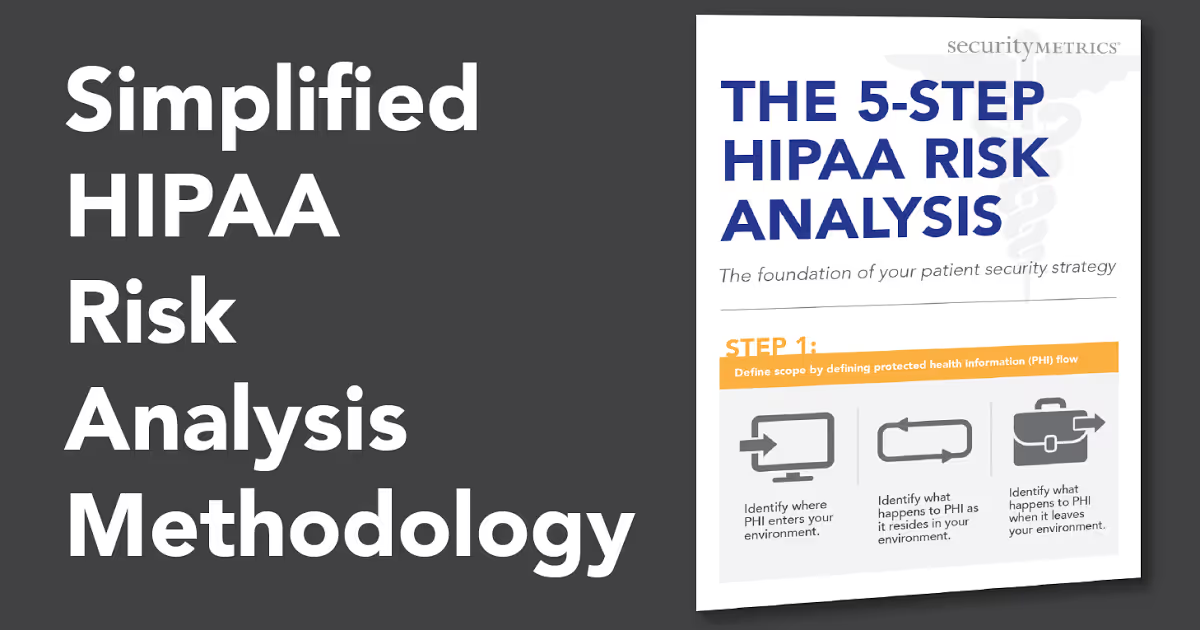
We wanted to make the risk analysis process even easier, so we identified a handful of easy-to-follow steps in this infographic. Enjoy our 5-step HIPAA risk analysis checklist!
Ready to go beyond the basics? Get into the nitty gritty on how to start a HIPAA risk analysis.
Related Posts



.svg)